
Why Alexa Says Device Offline
Get Information on Why Alexa Says Device Offline.
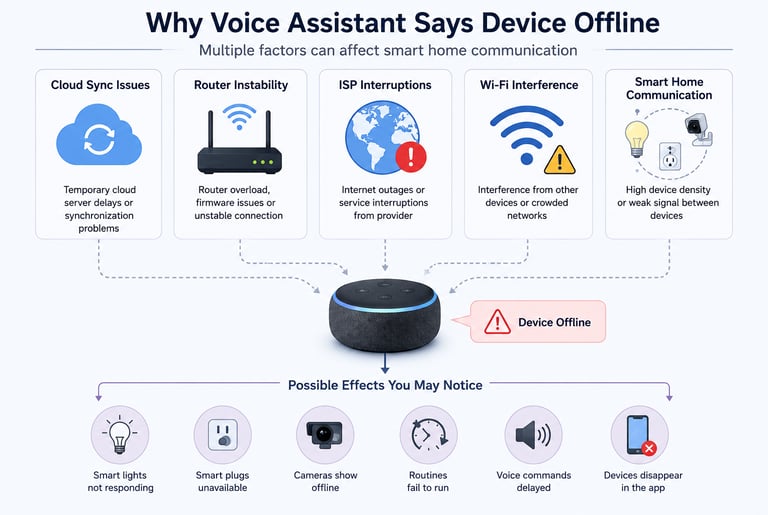
Introduction
Smart-home ecosystems have become increasingly dependent on reliable wireless communication. Devices such as Alexa-enabled speakers, smart lights, connected plugs, cameras, thermostats, and entertainment systems now interact continuously through cloud-based networks and wireless infrastructure.
As more homes adopt connected technologies, many users occasionally encounter situations where Alexa displays messages such as:
device offline
smart device not responding
unable to connect
device unavailable
communication interrupted
These messages may appear unexpectedly even when internet access seems to be functioning normally.
In some situations, users may notice:
smart lights disappearing temporarily
Echo devices reconnecting repeatedly
delayed voice commands
routines failing unexpectedly
devices showing offline after router changes
inconsistent smart-home synchronization
Because modern smart-home systems rely on multiple technologies communicating simultaneously, offline behavior may result from several different environmental or networking conditions.
This guide explains common factors that may contribute to Alexa offline messages and how wireless communication, cloud synchronization, and network behavior influence connected-device reliability.
Understanding How Alexa Communicates With Smart Devices
Alexa-enabled systems depend heavily on cloud-based communication.
When users interact with smart-home devices, communication may occur between:
the Echo device
the local wireless router
internet service infrastructure
cloud synchronization systems
smart-device applications
third-party smart-home ecosystems
Unlike traditional electronics that operate entirely offline, smart-home devices often require ongoing communication with remote servers.
Because multiple systems communicate continuously, temporary interruptions in any part of the process may contribute to:
offline messages
delayed responses
failed routines
synchronization inconsistencies
temporary device unavailability
In many situations, the smart device itself may still be powered on even while communication interruptions are occurring elsewhere within the network environment.
Cloud Synchronization and Offline Behavior
Cloud synchronization plays a major role in modern smart-home ecosystems.
Alexa-enabled systems often rely on cloud communication for:
device registration
routine execution
voice-command processing
smart-home synchronization
account authentication
connected-device communication
If communication between local devices and cloud services becomes unstable, users may occasionally notice offline messages appearing within the Alexa application.
Potential contributing factors may include:
temporary internet interruptions
cloud communication delays
account synchronization inconsistencies
overloaded wireless networks
router communication instability
Because smart-home ecosystems continuously exchange data with remote systems, even short communication interruptions may affect device visibility temporarily.
Router Instability and Wireless Communication
Wireless routers act as the central communication point for most connected devices inside the home.
If router behavior becomes inconsistent, smart-home communication may also become unstable.
Some network-related conditions that may contribute to offline behavior include:
router congestion
unstable firmware
signal interruptions
overheating hardware
overloaded traffic conditions
temporary Wi-Fi instability
automatic device reassignment between wireless bands
In certain environments, users may notice:
Alexa devices disconnecting randomly
smart-home devices reconnecting repeatedly
inconsistent voice-assistant responsiveness
delayed routine execution
smart devices disappearing temporarily
Because many smart-home devices remain connected continuously throughout the day, routers experiencing instability may affect multiple devices simultaneously.
ISP Interruptions and Internet Stability
Even when local Wi-Fi appears strong, internet provider interruptions may still influence smart-home communication.
Alexa-enabled systems depend heavily on stable internet access for cloud synchronization and voice processing.
Temporary ISP-related conditions may contribute to:
offline messages
delayed command processing
interrupted smart-home routines
device synchronization delays
reconnect behavior
Internet stability may fluctuate during:
severe weather conditions
regional outages
peak evening traffic
maintenance windows
infrastructure congestion
Because cloud communication remains active continuously, short interruptions may sometimes create noticeable smart-home inconsistencies.
Smart-Home Communication Complexity
Modern households often contain many simultaneously connected devices.
These may include:
smart speakers
streaming devices
gaming systems
security cameras
smart thermostats
wireless printers
connected lighting systems
phones and tablets
cloud backup systems
As the number of connected devices increases, wireless communication patterns also become more complex.
In some environments, increased traffic demand may contribute to:
delayed synchronization
inconsistent smart-device communication
temporary offline behavior
network congestion
slower device discovery
Lower-end routers sometimes struggle when many devices compete for simultaneous wireless communication resources.
Why Smart Devices Sometimes Disconnect Randomly
Many users become frustrated because smart-home devices may appear to disconnect unpredictably.
A device might function normally for several days before suddenly showing offline messages.
This behavior may occur because smart-home communication depends on multiple changing conditions simultaneously, including:
wireless congestion
signal obstruction
neighboring network activity
cloud synchronization conditions
router traffic load
internet stability
environmental interference
Because these variables fluctuate continuously, smart-home reliability may vary throughout the day.
Users may notice issues more frequently during:
evening streaming hours
gaming sessions
software updates
periods of heavy network activity
In some situations, devices reconnect automatically once communication conditions stabilize.
Environmental Interference and Signal Disruption
Wireless communication inside homes may also be affected by environmental interference.
Several household electronics emit signals that can influence wireless consistency, including:
microwave ovens
Bluetooth devices
cordless phones
wireless cameras
neighboring routers
gaming systems
baby monitors
Apartment buildings and densely populated neighborhoods may experience additional wireless congestion due to overlapping networks operating nearby.
As wireless interference increases, smart-home devices may occasionally experience:
delayed responses
unstable synchronization
intermittent communication behavior
temporary offline status
Because wireless conditions constantly change, some users notice that problems appear inconsistently rather than continuously.
Dual-Band Networks and Smart Devices
Many modern routers broadcast both:
2.4GHz
5GHz
wireless bands.
Although 5GHz networks generally provide faster speeds, they may also experience:
shorter signal range
weaker wall penetration
increased sensitivity to distance
Many smart-home devices operate more consistently on 2.4GHz because it provides broader coverage throughout larger areas.
Some routers automatically move devices between bands to optimize traffic management. In certain situations, this behavior may contribute to:
reconnect behavior
delayed synchronization
temporary device visibility issues
intermittent communication inconsistencies
Wireless behavior varies depending on network configuration and smart-home complexity.
Mesh Wi-Fi and Device Synchronization
Mesh networking systems are designed to improve wireless coverage across larger homes.
In many environments, mesh systems improve:
signal distribution
dead-zone reduction
roaming consistency
wireless coverage
However, some smart-home ecosystems communicate differently than traditional devices during transitions between mesh nodes.
Some users researching offline behavior also explore information regarding:
reconnect loops
roaming interruptions
synchronization delays
inconsistent smart-home communication
This behavior may vary depending on:
router firmware
mesh configuration
device compatibility
wireless congestion
smart-home density
Why Offline Messages Sometimes Appear After Router Changes
Some users notice offline behavior after:
changing routers
modifying Wi-Fi settings
updating firmware
replacing ISP equipment
renaming wireless networks
Because many smart-home devices store previous network communication settings, synchronization behavior may temporarily change after network modifications occur.
In some environments, devices may require additional time to stabilize communication after wireless conditions change.
Why Users Continue Researching Offline Issues
As connected-device ecosystems continue expanding, many users seek additional informational resources when recurring offline behavior persists.
Common research topics include:
Alexa device offline messages
smart devices reconnecting repeatedly
Wi-Fi instability affecting Alexa
router communication issues
delayed smart-home routines
cloud synchronization behavior
smart-home network congestion
In some environments, identifying the root cause may require broader evaluation of the overall wireless ecosystem rather than focusing only on a single device.
People Also Research
Users researching Alexa offline issues also commonly search for:
Alexa keeps disconnecting from Wi-Fi
Echo device offline problem
smart lights not responding to Alexa
Alexa routines stopped working
Alexa reconnecting repeatedly
Wi-Fi problems affecting smart speakers
smart-home device synchronization issues
Alexa delayed responses
Related Informational Guides
Additional informational resources may include:
Smart Home Wi-Fi Optimization Guide
Router Placement for Alexa Devices
Echo Dot Setup Problems Explained
Smart Speaker Connection Problems
Understanding Wireless Congestion
Alexa Not Connecting to 5GHz Wi-Fi
Frequently asked questions (F&Q) Updated 2026
Why does Alexa sometimes say a device is offline?
Temporary interruptions involving cloud synchronization, router communication, internet stability, or wireless congestion may contribute to offline messages.
Can router instability affect smart-home communication?
Yes. Routers experiencing congestion or unstable wireless behavior may affect device synchronization and communication consistency.
Why do offline messages appear randomly?
Smart-home systems depend on changing wireless conditions, cloud communication, and network activity levels that fluctuate throughout the day.
Can internet provider interruptions affect Alexa devices?
Yes. Temporary ISP interruptions may influence cloud synchronization and smart-home responsiveness.
Why do some smart devices reconnect automatically later?
In some environments, devices reconnect once wireless communication or cloud synchronization stabilizes.
Final Thoughts
Alexa-enabled smart-home systems depend heavily on stable wireless communication and reliable cloud synchronization.
In many situations, offline messages may involve multiple environmental and networking conditions, including:
router instability
cloud synchronization behavior
ISP interruptions
wireless congestion
signal interference
smart-home density
network communication delays
As smart-home ecosystems continue growing, maintaining reliable wireless performance becomes increasingly important for stable connected-device communication.
Understanding how networking conditions influence smart-home behavior may help users better recognize why offline messages sometimes appear unexpectedly and why certain environments require broader troubleshooting evaluation over time.
Alexechsetup.site © 2025. All Rights Reserved.
Disclaimer (Important)
To the fullest extent permitted by law, AlexechSetup.site excludes all representations, warranties, and conditions relating to the website and its content. This platform is independently operated by an individual and has no association with any brand, company, reseller, or third-party service provider. The website does not sell products, collect personal information, or offer any form of online or offline services. It exists solely as a free, educational resource designed to share general information and insights about common issues with smart devices such as speakers, lights, and plugs.
All content is provided strictly for informational purposes only and should not be interpreted as professional advice, technical support, or a service guarantee. Visitors are responsible for how they choose to use the information presented on this site.This content is for informational purposes only and is not affiliated with any official brand or service provider.This website is not affiliated with any brand. All trademarks belong to their respective owners.
Privacy Notice (Short)
We may collect limited data to improve user experience. Please review our Privacy Policy for full details.
AlexechSetup provides independent informational troubleshooting content for smart-home and Alexa-related connectivity issues. We are not affiliated with Amazon or any third-party brand.
Owner: Manisha Kumari
Email: info@alexechsetup.site
This website provides free informational content for smart device troubleshooting.We are independent and not affiliated with Amazon, Alexa, or any brand.
About
Editorial Policy