
Smart Home Wi‑Fi Optimization
Guide for Alexa and Echo Devices
Introduction
Smart speakers and connected home devices have changed how people interact with technology inside modern homes. Voice-controlled systems now manage music, reminders, lights, cameras, thermostats, entertainment systems, and many other connected experiences. However, as smart homes become more advanced, network stability has become one of the biggest hidden challenges affecting device performance.
Many users experience frustrating issues where Alexa suddenly disconnects, buffering begins unexpectedly, smart-home devices appear offline, or routines stop responding correctly. In some cases, users may believe their Echo device is defective when the actual issue is related to the home Wi‑Fi environment itself.
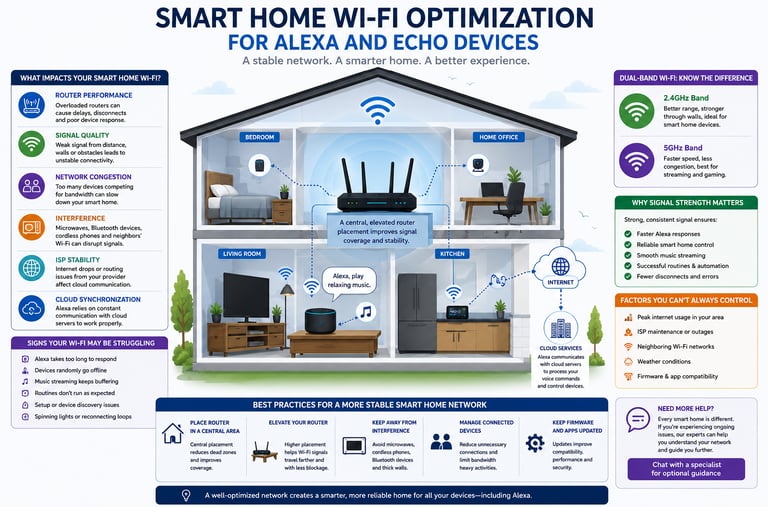
A stable smart-home experience depends on multiple layers working together:
wireless signal quality
router performance
internet provider stability
cloud synchronization
network congestion
smart-device compatibility
environmental interference
Even homes with high-speed internet connections can still experience smart-speaker instability. Speed alone does not guarantee a reliable smart-home environment.
This guide explains the major network conditions that commonly affect Alexa-enabled devices and why smart-home optimization has become increasingly important in modern connected homes.
Why Smart Speakers Depend on Stable Networking
Unlike traditional electronic devices that operate locally, Alexa-enabled speakers continuously communicate with cloud-based systems. Every voice request typically requires communication between:
the Echo device
the local router
the internet provider
remote cloud servers
connected smart-home ecosystems
Because of this constant communication process, even small interruptions can affect user experience.
Many users notice issues such as:
Alexa not responding
delayed voice commands
music buffering
random disconnects
devices appearing offline
smart-home routines failing
setup interruptions
synchronization delays
These problems often originate from network instability rather than hardware failure.
As more homes add connected devices, maintaining wireless consistency becomes increasingly important.
The Hidden Impact of Wireless Congestion
Modern homes contain significantly more connected devices than they did only a few years ago.
Typical connected households now include:
smartphones
tablets
gaming consoles
streaming devices
smart TVs
security cameras
laptops
smart thermostats
voice assistants
wireless printers
smart bulbs
connected appliances
All of these devices compete for wireless communication resources.
In some homes, routers become overloaded by simultaneous traffic demands, especially during peak activity hours. Wireless congestion can reduce network responsiveness and create instability that affects smart-home devices more heavily than standard browsing activities.
Voice assistants are especially sensitive to communication interruptions because they rely on constant low-latency cloud interaction.
This is why users may notice Alexa issues during:
evening streaming hours
gaming sessions
video calls
multiple-device usage periods
software update activity
As wireless traffic increases, smart speakers may begin experiencing inconsistent communication behavior.
Router Placement and Signal Quality
One of the most overlooked causes of smart-home instability is router placement.
Many households position routers based on convenience rather than signal distribution efficiency. Routers are frequently installed:
behind televisions
inside cabinets
beside gaming systems
near microwaves
close to metal objects
near thick walls
These placements can weaken wireless transmission significantly.
Wi‑Fi signals perform best when routers are located:
centrally within the home
in elevated open spaces
away from interference-heavy electronics
clear from physical obstructions
Poor signal quality can contribute to:
delayed Alexa responses
random disconnects
inconsistent device discovery
weak smart-home communication
failed setup processes
Large homes may experience additional signal dead zones where wireless coverage becomes unstable.
Understanding Dual-Band Network Behavior
Most modern routers operate using:
2.4GHz
5GHz
wireless bands.
While 5GHz networks typically provide faster speeds, they also have shorter range and weaker wall penetration.
Many smart-home devices function more consistently on 2.4GHz because of:
wider coverage range
improved wall penetration
broader compatibility
reduced sensitivity to distance
Some routers automatically move devices between bands in an attempt to optimize performance. However, certain smart-home devices may behave inconsistently when automatic band steering occurs.
This can sometimes contribute to:
unstable setup behavior
repeated reconnection loops
device offline messages
inconsistent communication quality
Users often assume the smart speaker itself is malfunctioning when the issue is actually related to network configuration behavior.
Mesh Networks and Smart-Home Ecosystems
Mesh Wi‑Fi systems have become increasingly popular for improving signal coverage across larger homes.
In many situations, mesh networks significantly improve:
wireless coverage
roaming consistency
dead-zone reduction
device stability
However, smart-home ecosystems may behave differently than phones or laptops when transitioning between mesh nodes.
Some users report issues such as:
intermittent disconnects
delayed smart-home routines
devices reconnecting unexpectedly
setup interruptions during roaming
This behavior varies depending on:
router firmware
smart-home complexity
network density
device compatibility
In some cases, homes with many connected smart devices require additional network optimization beyond standard consumer router settings.
ISP Stability and Cloud Communication
Even when in-home Wi‑Fi appears strong, internet provider instability can still affect Alexa-enabled devices.
Voice assistants depend heavily on uninterrupted cloud communication. Temporary ISP interruptions may cause:
device offline errors
delayed responses
failed smart-home commands
buffering audio
spinning light behavior
reconnection attempts
Users may believe the Echo device itself is failing when the actual problem originates from external network conditions.
ISP-related instability often becomes more noticeable during:
severe weather
peak evening traffic
local infrastructure congestion
maintenance windows
regional outages
Because smart speakers communicate continuously with remote servers, even short interruptions can create noticeable user-facing issues.
Smart Home Density and Network Stress
As homes expand their smart-device ecosystems, routers must manage increasingly complex traffic patterns.
Connected environments may include:
cameras streaming continuously
background app synchronization
cloud backups
entertainment streaming
gaming traffic
voice assistant communication
automation routines
connected sensors
Lower-end routers may struggle under these demands.
In some situations, overloaded networks contribute to:
slower command processing
unstable smart-home communication
delayed synchronization
inconsistent Alexa responsiveness
This becomes especially common in households where many wireless devices operate simultaneously.
Firmware and Software Synchronization
Modern smart-home ecosystems depend heavily on software synchronization between:
routers
mobile apps
cloud services
smart devices
voice assistants
Compatibility issues occasionally appear after:
router firmware updates
app updates
ISP equipment changes
cloud synchronization changes
smart-device updates
Temporary compatibility inconsistencies can contribute to:
setup failures
disappearing devices
offline errors
unstable routines
delayed responses
Users may not immediately recognize that software synchronization plays a major role in smart-home reliability.
Environmental Interference Inside Modern Homes
Wireless interference is another common factor affecting smart-speaker stability.
Many household electronics emit signals that may interfere with wireless communication, including:
microwave ovens
Bluetooth devices
cordless phones
wireless cameras
neighboring routers
baby monitors
Apartment buildings and densely populated areas often experience higher levels of signal congestion due to overlapping wireless activity.
As wireless environments become more crowded, smart speakers may experience reduced stability and inconsistent cloud communication.
Why Smart-Home Problems Often Feel Random
Many users become frustrated because Alexa-related issues may appear inconsistent.
A device might function normally for several days before suddenly experiencing:
disconnects
delays
buffering
offline errors
failed routines
This inconsistency occurs because smart-home networking depends on many changing variables simultaneously.
Wireless conditions constantly fluctuate due to:
bandwidth demand
neighboring network activity
ISP routing
device congestion
environmental interference
cloud communication conditions
Because these variables change dynamically, smart-home troubleshooting can become more complex than many users initially expect.
Why Some Users Seek Additional Troubleshooting Guidance
As smart-home environments become more complicated, some users prefer additional assistance understanding:
persistent connection instability
unusual offline behavior
recurring setup interruptions
device synchronization issues
smart-home compatibility concerns
Complex networking behavior may sometimes require deeper analysis depending on the home environment, router setup, and connected device ecosystem involved.
For this reason, many users continue exploring troubleshooting resources, informational support channels, and guided smart-home diagnostics when recurring problems continue appearing.
People Also Experience
Users researching smart-home Wi‑Fi issues also commonly search for:
Alexa disconnects at night
Echo Dot setup problems
Alexa buffering music
Alexa says device offline
smart-home devices randomly disconnect
Alexa not discovering devices
Wi‑Fi dead zones affecting smart speakers
smart lights not responding to Alexa
Related Informational Guides
You may also find these troubleshooting guides helpful:
Alexa Keeps Disconnecting
Router Placement for Alexa Devices
Alexa Not Connecting to 5GHz Wi‑Fi
Why Smart Devices Go Offline
Echo Dot Setup Problems Explained
Smart Speaker Connection Problems
Frequently asked questions (F&Q) Updated 2026
Why does Alexa disconnect even when Wi‑Fi seems strong?
Signal quality, wireless interference, router congestion, ISP instability, and cloud synchronization behavior can all affect smart-home communication even when internet speeds appear fast.
Can too many smart devices affect Alexa performance?
In some homes, large numbers of connected devices may increase wireless congestion and reduce overall network responsiveness.
Are mesh systems always better for Alexa?
Mesh systems improve coverage in many environments, but device behavior varies depending on network configuration and compatibility.
Why do smart-home issues happen more during evenings?
Peak internet traffic, higher household bandwidth usage, and neighborhood wireless congestion often increase during evening hours.
Does router placement really matter?
Yes. Physical obstructions, interference-heavy electronics, and weak signal distribution can significantly affect smart-speaker communication.
Final Thoughts
Smart-home devices rely heavily on stable wireless communication. In many situations, Alexa-related issues are connected not only to the device itself, but also to:
router behavior
network congestion
signal quality
ISP conditions
cloud synchronization
wireless interference
As connected homes continue expanding, maintaining reliable network performance becomes increasingly important for smooth smart-speaker communication and long-term smart-home stability.
Understanding how these network conditions interact can help users better recognize why connectivity behavior may change over time and why some smart-home environments require deeper troubleshooting attention than expected.