
Echo Dot Setup Problems Explained
Here is Echo Dot Setup Problems Explained . All informational Guidance
Introduction
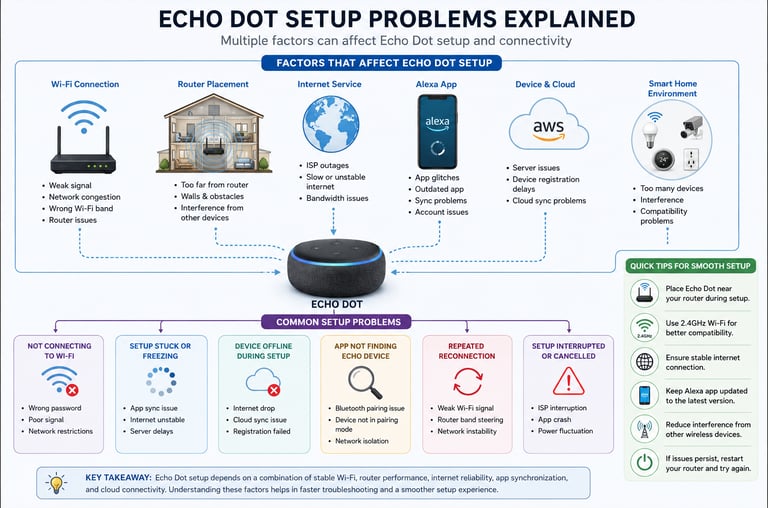
Smart speakers have become a regular part of many modern households. Devices such as the Echo Dot are commonly used for voice assistance, streaming media, reminders, smart-home automation, and connected-device communication.
As smart-home ecosystems continue expanding, many users also encounter setup-related challenges while configuring Echo devices for the first time.
In different situations, users may notice:
Echo Dot not connecting to Wi-Fi
setup interruptions during installation
Alexa app synchronization delays
smart-device pairing inconsistencies
temporary offline messages
network detection problems
repeated reconnection behavior
delayed smart-home communication
These situations may occur for several reasons and are not always directly related to the Echo device itself.
Modern smart-home systems depend on multiple technologies working together simultaneously, including:
wireless networking
router communication
cloud synchronization
internet service stability
mobile application connectivity
device compatibility
smart-home ecosystem behavior
This guide explains common environmental and networking conditions that may influence Echo Dot setup experiences and why wireless consistency plays an important role in connected-device communication.
Understanding How Echo Dot Setup Works
Echo devices rely heavily on internet-based communication during onboarding and synchronization.
During setup, communication may occur between:
the Echo device
the Alexa mobile application
the local wireless router
internet provider infrastructure
cloud-based services
connected smart-home systems
Because several systems communicate at the same time, setup reliability may sometimes be affected by network conditions or wireless instability.
In some environments, users may notice:
delayed setup progress
device discovery interruptions
temporary pairing inconsistencies
app synchronization delays
intermittent Wi-Fi communication
These experiences may vary depending on the overall network environment inside the home.
Wireless Stability and Setup Reliability
Stable wireless communication is one of the most important factors during Echo device onboarding.
Even homes with high-speed internet may occasionally experience setup inconsistencies if wireless conditions fluctuate during synchronization.
Several network-related conditions may influence setup behavior, including:
weak signal coverage
router congestion
overlapping wireless networks
dual-band communication behavior
temporary internet interruptions
environmental interference
firmware synchronization delays
Because wireless conditions constantly change, setup experiences may differ between locations within the same home.
Some users may notice more stable behavior near the router compared to distant rooms or areas with weaker signal distribution.
Router Placement and Signal Quality
Router positioning can influence wireless consistency throughout the home.
Many routers are commonly placed:
behind televisions
inside cabinets
near gaming consoles
beside microwaves
close to large metal surfaces
near thick structural walls
These placements may reduce signal distribution efficiency and affect connected-device communication.
For many smart-home environments, routers perform more consistently when positioned:
in open spaces
away from heavy electronics
elevated from the floor
closer to the center of the home
Signal quality may affect:
device synchronization
onboarding consistency
smart-home responsiveness
wireless communication stability
Because Echo devices communicate continuously during setup, signal consistency often becomes more important than internet speed alone.
Dual-Band Wi-Fi and Smart Devices
Many modern routers broadcast both:
2.4GHz
5GHz
wireless bands.
While 5GHz networks typically provide faster speeds, they may also have:
shorter range
weaker wall penetration
increased sensitivity to distance
Some smart-home devices operate more consistently on 2.4GHz networks due to broader wireless coverage across larger areas.
Certain routers automatically switch devices between bands to optimize network traffic. In some situations, this behavior may contribute to:
setup interruptions
delayed pairing
temporary reconnection behavior
inconsistent onboarding communication
Wireless behavior may vary depending on router configuration and overall smart-home complexity.
Alexa App Communication Behavior
The Alexa mobile application plays an important role during Echo setup and device synchronization.
During onboarding, the app communicates with:
cloud services
local wireless networks
account systems
Echo devices
Temporary synchronization delays may occasionally contribute to:
incomplete setup screens
delayed device detection
registration inconsistencies
temporary offline behavior
In some cases, communication consistency may also be influenced by:
background mobile applications
internet fluctuations
software updates
VPN usage
network switching between mobile and Wi-Fi connections
Because onboarding depends heavily on cloud communication, setup reliability may vary under changing network conditions.
Why Echo Devices Sometimes Appear Offline
Some users may temporarily notice offline messages during setup or synchronization.
This behavior may occur when communication between the device, router, and cloud systems becomes interrupted.
Potential contributing factors may include:
unstable Wi-Fi conditions
temporary ISP interruptions
overloaded wireless traffic
router communication delays
cloud synchronization interruptions
In some situations, devices may reconnect automatically once communication stabilizes.
Because multiple systems are involved, temporary offline behavior does not always indicate hardware failure.
Smart-Home Density and Network Congestion
Many connected households now contain numerous wireless devices operating simultaneously.
These may include:
smart TVs
streaming devices
phones and tablets
gaming systems
security cameras
connected lighting systems
smart thermostats
cloud-connected appliances
As the number of connected devices increases, routers must manage more complex wireless communication patterns.
In some environments, increased network traffic may contribute to:
slower synchronization
delayed setup communication
intermittent wireless instability
reduced smart-device responsiveness
Network behavior may vary depending on router performance, signal coverage, and household bandwidth demand.
Mesh Wi-Fi and Echo Device Communication
Mesh Wi-Fi systems are designed to improve coverage throughout larger homes.
In many situations, mesh networking may help improve:
dead-zone reduction
signal distribution
wireless consistency
smart-home coverage
However, smart-home devices sometimes communicate differently than laptops or smartphones when transitioning between mesh nodes.
Some users researching setup behavior also explore information regarding:
reconnect behavior
roaming interruptions
delayed synchronization
mesh-network communication inconsistencies
This behavior may vary depending on:
router firmware
network configuration
wireless congestion
connected-device density
smart-home compatibility
Environmental Interference and Wireless Communication
Wireless communication may also be affected by environmental interference inside homes.
Several household electronics emit signals that can influence wireless stability, including:
microwave ovens
cordless phones
Bluetooth devices
neighboring routers
wireless cameras
gaming systems
baby monitors
Apartment buildings and densely populated neighborhoods may experience additional wireless congestion because many overlapping networks operate nearby.
As wireless environments become more crowded, users may occasionally notice:
slower setup communication
temporary signal instability
delayed synchronization
intermittent connection behavior
Because wireless conditions fluctuate throughout the day, setup consistency may also vary over time.
ISP Stability and Cloud Synchronization
Echo devices depend heavily on stable internet communication during onboarding and synchronization.
Even when local Wi-Fi appears strong, temporary internet provider interruptions may still affect smart-speaker behavior.
Some users researching setup interruptions also explore information regarding:
temporary offline messages
cloud synchronization delays
interrupted registration behavior
delayed voice-assistant communication
reconnect loops
ISP-related instability may become more noticeable during:
severe weather
peak evening usage periods
infrastructure maintenance
regional congestion
Because smart-home devices communicate continuously with cloud services, even short interruptions may affect setup consistency.
Why Setup Behavior Sometimes Changes
Many users notice that Echo setup experiences may appear inconsistent.
A device may connect successfully at one time but experience interruptions later under different wireless conditions.
This occurs because smart-home communication depends on multiple changing variables simultaneously, including:
wireless congestion
neighboring network activity
signal obstruction
cloud communication conditions
router traffic load
ISP stability
environmental interference
As these conditions fluctuate, smart-home communication behavior may also change.
Why Users Continue Researching Setup Issues
As connected homes become more advanced, many users continue exploring informational troubleshooting resources when recurring setup issues persist.
Users often research topics involving:
Echo Dot Wi-Fi setup behavior
Alexa synchronization delays
recurring offline messages
smart-home communication stability
wireless congestion
router compatibility
network-related onboarding interruptions
In some environments, identifying the underlying cause may require broader evaluation of the entire home networking ecosystem.
People Also Research
Users researching Echo Dot setup issues also commonly search for:
Alexa not connecting to internet
Echo device Wi-Fi problems
Alexa app not finding Echo device
Echo setup interruptions
smart-speaker connection instability
Alexa reconnecting repeatedly
Wi-Fi issues affecting smart-home devices
Alexa device offline behavior
Related Informational Guides
Additional informational resources may include:
Smart Home Wi-Fi Optimization Guide
Router Placement for Alexa Devices
Understanding Wireless Congestion
Smart Speaker Connection Problems
Why Smart Devices Go Offline
Alexa and 5GHz Wi-Fi Compatibility
Frequently asked questions (F&Q) Updated 2026
Why does Echo Dot setup sometimes fail even when internet speeds are fast?
Wireless consistency, signal quality, router congestion, and cloud synchronization conditions may all influence setup reliability.
Can router placement affect Echo setup behavior?
Yes. Signal obstruction, weak coverage, and environmental interference may affect wireless communication during onboarding.
Why might Alexa temporarily display offline messages during setup?
Temporary interruptions involving Wi-Fi communication, cloud synchronization, or ISP connectivity may contribute to offline behavior.
Can too many smart devices affect setup consistency?
In some connected environments, increased wireless traffic may contribute to congestion and delayed communication.
Why do setup problems sometimes seem random?
Smart-home communication depends on many changing variables, including wireless activity, signal conditions, and cloud communication stability.
Final Thoughts
Echo Dot setup reliability depends heavily on stable wireless communication and consistent network conditions.
In many situations, setup-related interruptions may involve multiple environmental and networking factors, including:
router placement
signal quality
wireless congestion
ISP stability
cloud synchronization
environmental interference
smart-home density
As connected-device ecosystems continue expanding, maintaining reliable network performance becomes increasingly important for stable smart-home communication.
Understanding how wireless environments influence smart-speaker behavior may help users better recognize why setup consistency can change over time and why some environments require deeper troubleshooting evaluation.
Alexechsetup.site © 2025. All Rights Reserved.
Disclaimer (Important)
To the fullest extent permitted by law, AlexechSetup.site excludes all representations, warranties, and conditions relating to the website and its content. This platform is independently operated by an individual and has no association with any brand, company, reseller, or third-party service provider. The website does not sell products, collect personal information, or offer any form of online or offline services. It exists solely as a free, educational resource designed to share general information and insights about common issues with smart devices such as speakers, lights, and plugs.
All content is provided strictly for informational purposes only and should not be interpreted as professional advice, technical support, or a service guarantee. Visitors are responsible for how they choose to use the information presented on this site.This content is for informational purposes only and is not affiliated with any official brand or service provider.This website is not affiliated with any brand. All trademarks belong to their respective owners.
Privacy Notice (Short)
We may collect limited data to improve user experience. Please review our Privacy Policy for full details.
AlexechSetup provides independent informational troubleshooting content for smart-home and Alexa-related connectivity issues. We are not affiliated with Amazon or any third-party brand.
Owner: Manisha Kumari
Email: info@alexechsetup.site
This website provides free informational content for smart device troubleshooting.We are independent and not affiliated with Amazon, Alexa, or any brand.
About
Editorial Policy